
Festival of ‘translocal’ urbanism
Here and Elsewhere
A curatorial essay for the Translocal Urbanism student visual storytelling competition
Dr Vera Xia, Lecturer in Design and Urban Technologies, University of Sydney
Dr Ian Woodcock, Senior Lecturer in Urbanism, University of Sydney
The 2026 Festival is centred on translocal urbanism: the connections between people and places across geographic and cultural boundaries. These connections are shaped through movement, but people are not the only one s that move. Gareth Doherty’s 2026 Denis Winston Memorial Lecture, Trancescapes: Afro-Brazilian Terreiros and Other Landscapes, prompted me to think further about these crossings. What stayed with me most was the idea that people cross borders, but so do goods, ecologies, relationships, memories and identities. These different movements intersect, transforming both what travels and the places through which it moves.
This essay introduces this year’s Student Visual Storytelling Competition and the students’ interpretations of translocal urbanism.
Before turning to their works, we would like to begin with our own translocal trajectories.
![[Palimpsest by Hannah Keogh] - My photograph captures a space of familiarity yet at the same time estrangement and distance, taken in the neighbourhood of Newtown I grew up in, the location of a laundromat reflecting a local pub has undergone change](https://images.squarespace-cdn.com/content/v1/63fd3fbd5eb85d18b12251b6/0d355db1-ef95-4c64-97e8-b86b3809155d/Entry13.jpg)
[Palimpsest by Hannah Keogh] - My photograph captures a space of familiarity yet at the same time estrangement and distance, taken in the neighbourhood of Newtown I grew up in, the location of a laundromat reflecting a local pub has undergone change throughout time prompting memories associated with them to warp become somewhat forgotten. Inspired by the demolishment of a historic residence behind my house, I aim to capture fleeting moments of my community to both conserve the past but also document the transformation. The figures in motion, reflected on the window of a static private space, reduces them to a minor, temporary transformation in a neighbourhood made up of layered histories, past and present memories.
Vera Xia:
encountering a translocal Sydney
I first experienced translocal connections in Sydney through domestic life. I moved from China to Australia when I was seventeen. For my first eighteen months in Sydney, I lived with two host families: first, a Vietnamese family in Kensington and then an Indonesian family of Chinese heritage in Maroubra. These were arranged homestays, but they were also my first homes in Australia.
What interested me was not only that my host families came from different cultural backgrounds. Different languages, memories and ways of doing things came together in these homes—and, of course, different ways of cooking. I also saw how cultural practices changed and adapted through life in Sydney.
Over time, I came to understand Sydney’s multiculturalism as much broader than my starting point of connections between Australia and Asia. Ien Ang’s writing helped me see the everyday negotiations within multicultural life. Hybridity is not always a smooth or positive mixing of cultures. Cultural borderlands also have rules and hierarchies. They affect who can cross, who must give way and who is recognised as belonging (Ang 2001, pp. 146, 165).
This drew me towards streets, parks and other public spaces. I became interested in places where I could move around, observe and see these negotiations taking place. Culture is expressed not only through ethnicity or visible symbols. It is also present in social norms, daily routines, ways of using space and ways of relating to others.
Ian Woodcock:
a mixture beyond maps
I am a migrant to Australia, the child of migrants to the UK, themselves the children of migrants from the Netherlands and Hong Kong, and not that far back, migrants from different parts of mainland China. I used to wonder which parts of me came from which geographic origins but have come to enjoy the idea that the mixture cannot be pinned down because it is the product of migrations and mixings from beyond memory and maps. When I cook, I like to free-style whatever is in the fridge and break as many culinary rules as possible to see what happens. Mostly, it tastes great!
Growing up in London in the 1970s, I used to feel like an outsider, but now I really do feel in my bones that translocalism is who we are all increasingly becoming, and all of us here in Australia are now translocal. Aboriginal and Torres Strait Islander peoples have long maintained connections across Australia and with people beyond. Colonisation caused profound disruption to Indigenous Australians and their connections to Country. Ongoing and increasingly diverse migration to Australia, both temporary and long-term, has also placed people in a fluid state of multiple connections to places near and far.
When I go back to London to visit my family home, I feel right at home these days, despite the rising tide of essentialist politics. It is now obvious to me what a fantasy the idea of culturally self-contained identities has always been.
Our experiences lead us towards translocalism from different but connected directions. We wanted to begin with our own trajectories before turning to the student works. They are only two interpretations of translocalism. The visual stories presented in this exhibition offer many more.
![[After The Flag Comes Down by Fadlan Hamizan Ekantoro] - You might look at this picture and think this is a normal photograph of a sunny afternoon on Maroubra Beach. But look closer and you’ll see bits and pieces of home. A blangkon. Batik. Red and](https://images.squarespace-cdn.com/content/v1/63fd3fbd5eb85d18b12251b6/3a1902f3-165d-433c-87fa-dcf57d3622b5/Entry06.jpeg)
[After The Flag Comes Down by Fadlan Hamizan Ekantoro] - You might look at this picture and think this is a normal photograph of a sunny afternoon on Maroubra Beach. But look closer and you’ll see bits and pieces of home. A blangkon. Batik. Red and white. A national team football jersey. Indonesia’s Independence Day celebration had just finished on the reserve nearby, and these are the few who stayed, drifting down to the sand, not quite ready to let the day go. On a foreign place, feeling at home comes rarely and it’s hard to let go of when it does. For the ones still here, a little of home stays on the beach.
This year’s student competition
The 2026 Festival of Translocal Urbanism Student Visual Storytelling Competition asked undergraduate and postgraduate students from any discipline to think about their everyday lives, wherever they call home. We asked them to focus on places and situations where they felt connected to other places and times, as well as to the present moment.
The competition included two streams, which gave students some guidance for approaching the theme. Hybrid Identities asked students to consider how different places, cultures and experiences have shaped who they are. Hidden Global Sydney asked them to find and document places in Sydney that connect with another culture, city, country or wider global influence.
The competition welcomed different formats. Students could submit photographs, short photo reels or collages incorporating illustration, together with written reflections explaining their interpretations of translocal urbanism.
The competition was developed in partnership with PIA Emerging Planners. Alongside their representatives, Rishikesh Gujarathi and Jack Freckelton from the PIA NSW Emerging Planners Committee, we had the pleasure of reading these stories. We assessed the entries against three equally weighted criteria: engagement with translocal urbanism; creativity, storytelling and impact; and technical execution.
Looking across the works selected for this exhibition, we identified five overlapping themes. These are ways of reading the selected entries rather than fixed categories, and many works could sit within more than one. For the purpose of the exhibition, we have placed each work where it opens up a particularly useful connection.
1
Home-making across places
Home travels with us through food, objects, colours, memories and everyday routines. It is made again through what we keep, what we find and what we take on in a new place.
![[The Room That Learned My Name by Hejia Chen] - I chose to show the same room at two moments: empty when I first arrived, and later filled with the traces of my everyday life. Familiar food, personal belongings and objects from home represent the lif](https://images.squarespace-cdn.com/content/v1/63fd3fbd5eb85d18b12251b6/1dc5330b-559e-4f3c-b191-c3a632d2e6ef/Entry03+Hejia+Chen.jpg)
[The Room That Learned My Name by Hejia Chen] - I chose to show the same room at two moments: empty when I first arrived, and later filled with the traces of my everyday life. Familiar food, personal belongings and objects from home represent the life I carried with me, while newer additions reflect the life I began to build in Sydney. The Christmas tree is especially meaningful to me, as putting one up was something I had never done before moving to Australia. Together, these elements show my translocal identity as something constantly being reshaped—through what I keep, what I adopt, and how different places and cultures gradually come to coexist in one small room.
![[Celebrations of home by Ellen Yangwei Luo] - Home is red when it comes to festivals and celebrations, the table crowded with dishes chosen for the idioms and wishes woven into their names. The house is rarely quiet, filled with overlapping voices, l](https://images.squarespace-cdn.com/content/v1/63fd3fbd5eb85d18b12251b6/63bce81a-f922-4a18-a339-9362aa2079c0/Entry05.jpeg)
[Celebrations of home by Ellen Yangwei Luo] - Home is red when it comes to festivals and celebrations, the table crowded with dishes chosen for the idioms and wishes woven into their names. The house is rarely quiet, filled with overlapping voices, laughter, and the clatter of plates. Sometimes on a quieter afternoon, my uncle might come home with flowers, bringing some more red to brighten the room. Red is not my favourite colour, but it’s the colour of home.
![[Me, for now. by Moulya Raju] - This collage layers a double exposure of Sydney's Greenway walk with an Independence Day post from home; two skies, one month. The inset photographs are ordinary moments: closing time at work, sampling food at a local](https://images.squarespace-cdn.com/content/v1/63fd3fbd5eb85d18b12251b6/656b6739-cb41-4b36-a89e-a22888d988b2/Entry18.jpg)
[Me, for now. by Moulya Raju] - This collage layers a double exposure of Sydney's Greenway walk with an Independence Day post from home; two skies, one month. The inset photographs are ordinary moments: closing time at work, sampling food at a local market, newlyweds getting their photos taken in the city, and my daily walk to uni alongside people chasing the same degree, different lives. The faded text and tricolour smoke are reminders that home now reaches me through a screen, not distance. This isn't a fixed identity — just the version of me this city, this month, quietly shaped. Still finding its edges.
![[Cabramatta - Tiffany Tran] - “Cabramatta, piece of home. Busy streets, familiar food and every corner carrying its own story”](https://images.squarespace-cdn.com/content/v1/63fd3fbd5eb85d18b12251b6/2400c7ef-99c8-4cae-8f19-a982b4827641/Entry01+Tiffany+Tran.jpeg)
[Cabramatta - Tiffany Tran] - “Cabramatta, piece of home. Busy streets, familiar food and every corner carrying its own story”
2
The global in everyday Sydney
Translocal connections are often found in ordinary places. They appear in markets, streets, restaurants, buildings and cultural gatherings. Ien Ang describes this as the “micropolitics of everyday life,” where global change is experienced and negotiated (Ang 2001, pp. 157-158).
[Harbour Deco by Tanya Sonker] - This reel explores the hidden connection between Sydney and Mumbai through Art Deco architecture. Mumbai is where I was raised, but after moving to Sydney for graduate school, I noticed similar Art Deco elements here. By comparing three places – buildings, restaurants, and theatres – I place these former British colonial ports in conversation, revealing motifs and connections that might otherwise go unnoticed. Art Deco was a departure, and in Mumbai’s case, deliberate resistance, from British colonial architecture. From porthole windows in Clovelly to tidal motifs in Churchgate, these coastal cities honoured what made them unique through a global architectural movement.
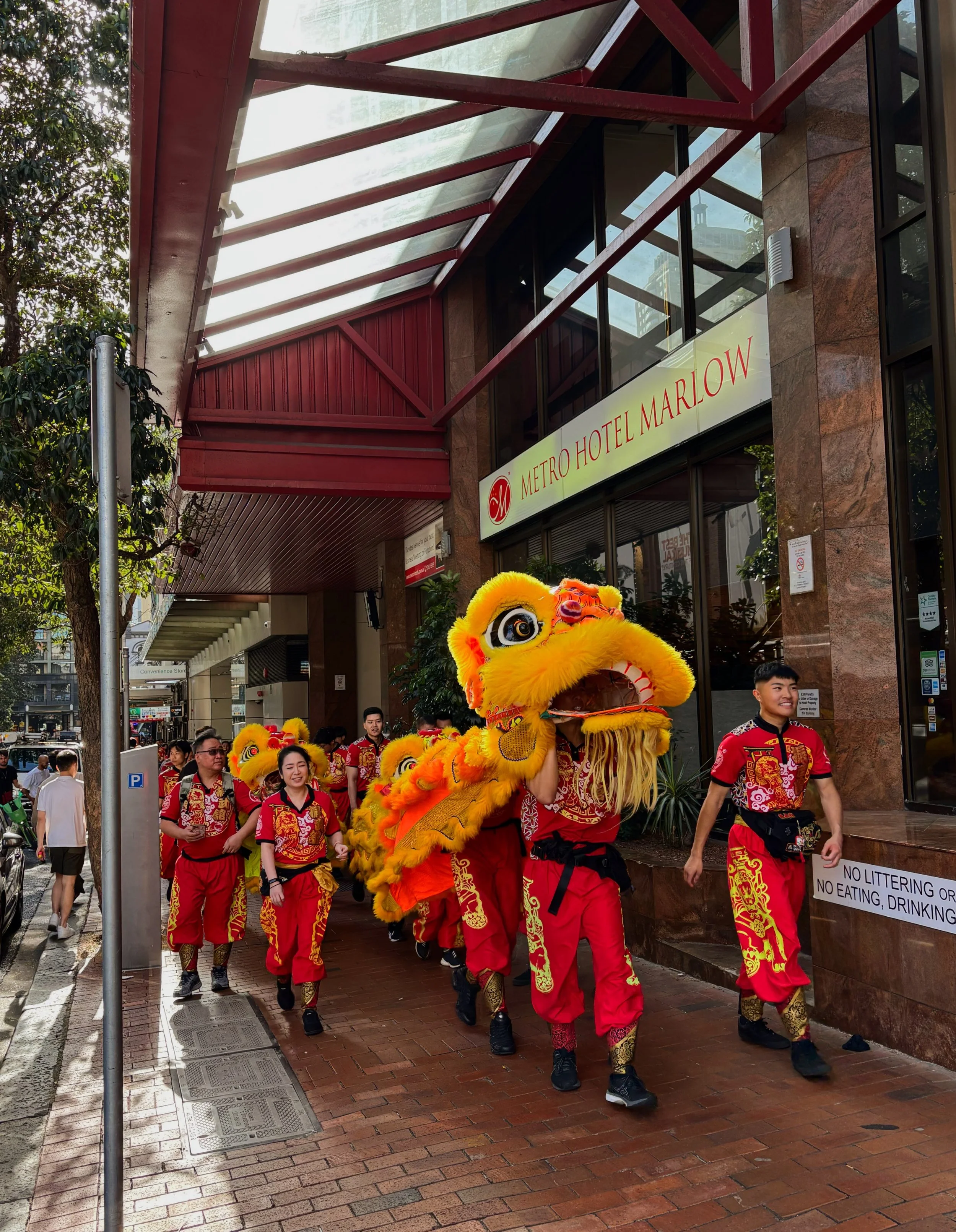
[Lion on the street by Pen-Tu Chang] - This photo captures a lion dance taking place on an ordinary street in Sydney. The traditional Chinese performance brings culture practice to Sydney urban environment. The contrast between the colorful lion and the surrounding building show cultural identity can be maintained and expressed in a different local context.
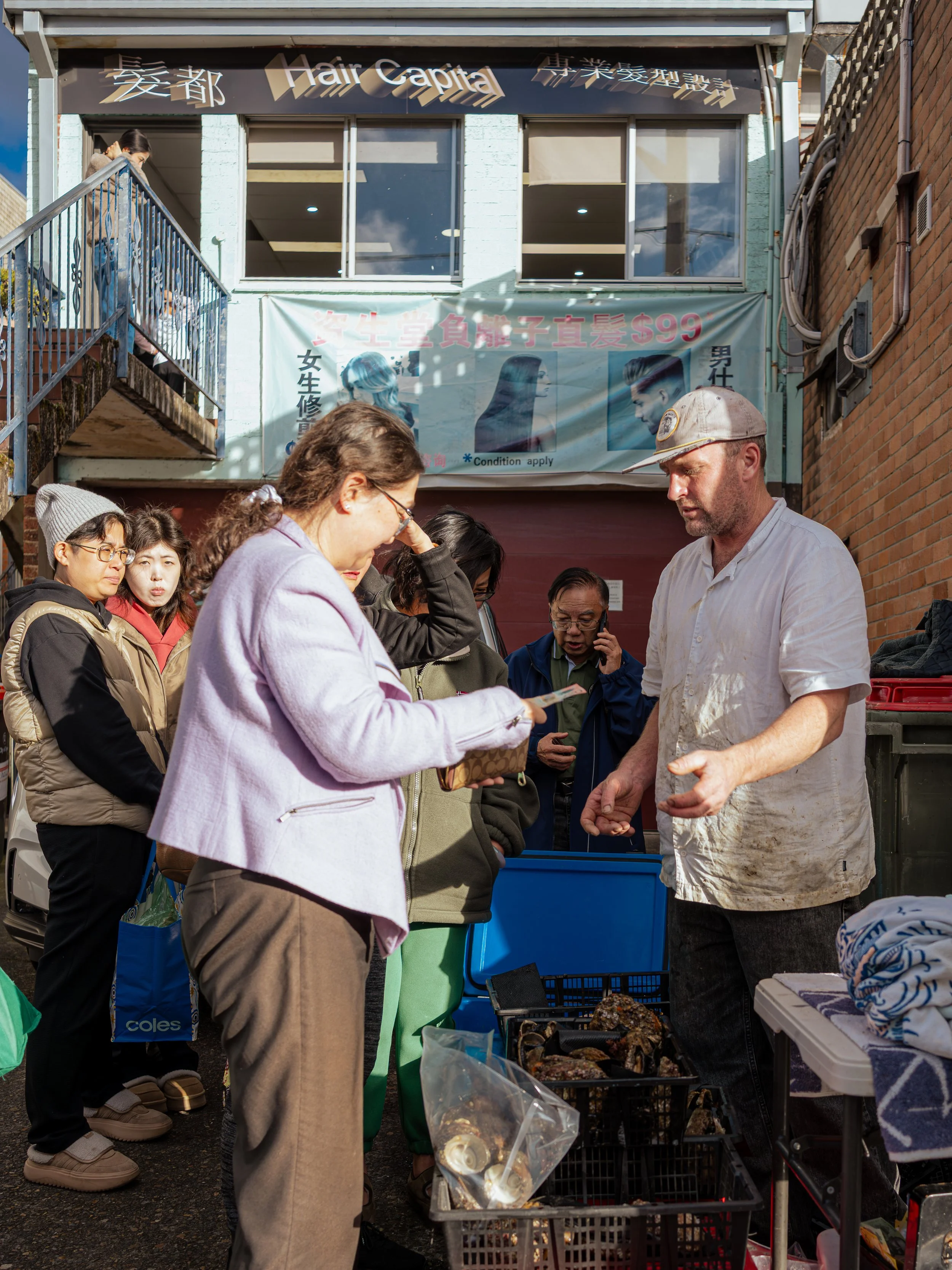
[Between Places by Yu Rong] - I was drawn to this ordinary moment at a local market in Sydney. The Chinese signs, the people and the simple exchange happening on the street show how different cultures naturally become part of everyday city life. To me, this is what translocal urbanism looks like in daily life.
[Burwood: Local Streets, Global Stories by Michelle Cheung] - My entry presents Burwood Chinatown as a place where the local and global are continuously intertwined. Through food, language, cultural symbols, businesses and shared public spaces, Burwood carries connections to communities and places beyond Sydney while transforming them within its own local context. The reel also reflects my personal relationship with this transformation: a familiar suburb has become a space where memories, identities and cultures from elsewhere are encountered and shared. Rather than portraying culture as belonging to one fixed place, my entry shows translocalism as an everyday process—where people, traditions and experiences move across places, creating new connections and reshaping what “local” means.
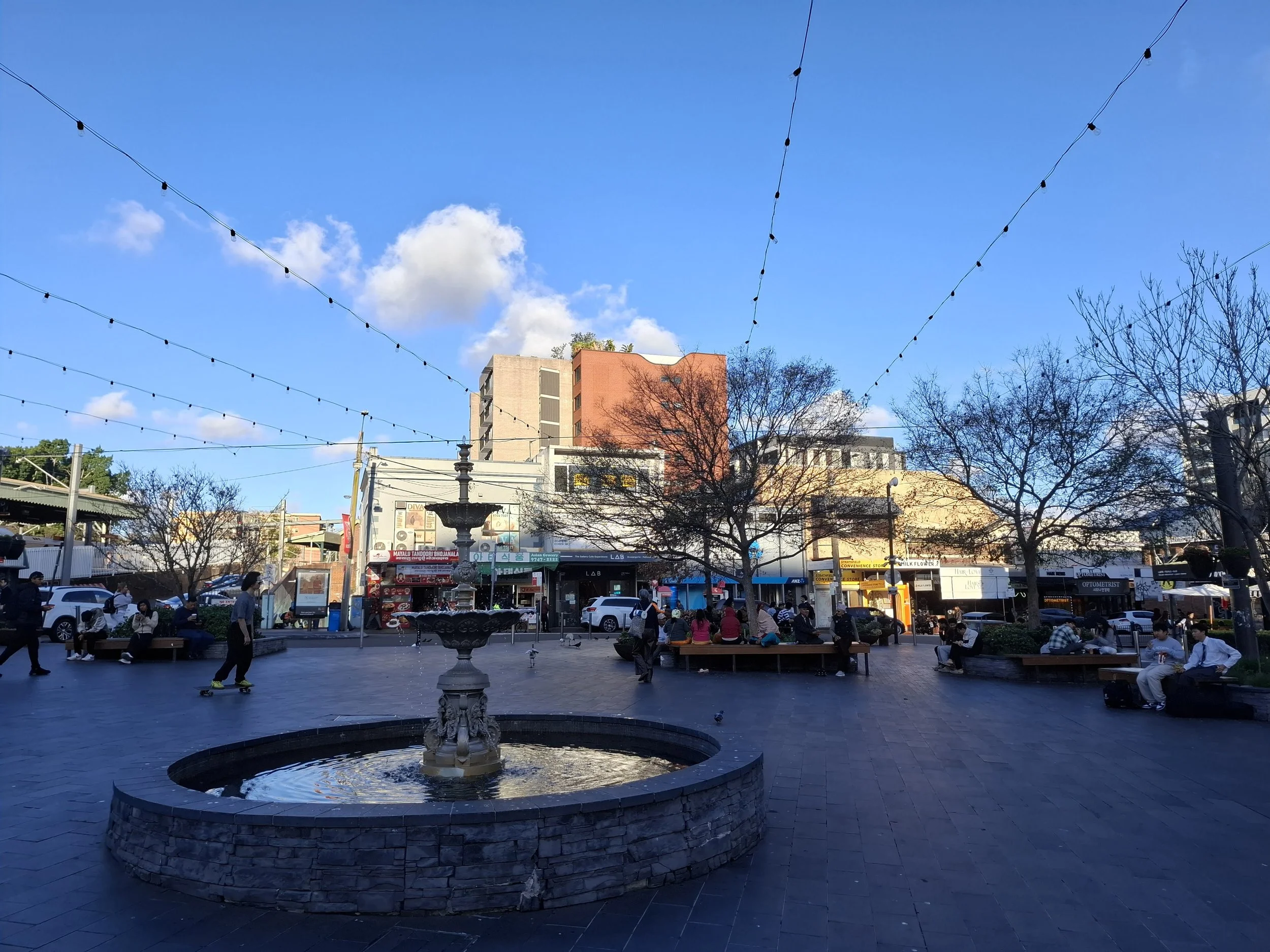
[People & Place by Long In Cheng] - A place of gathering, where people with different lives, interests, and cultures all come together in one place. A location with cuisine so diverse, you can try Italian on one day and Korean the next. An environment that some people call a home away from home. This is how I describe Strathfield.
3
Living across past and present
Moving between places can also mean living with different times. Memories and histories from somewhere else continue to shape how we view and experience the place where we are now.
![[Before My Bed A Pool of Moonlight by Yifan Kong] - This photo was taken at the Heritage Building, Sancta Sophia College, which recently celebrated its first century. Moonlight came through the window. This scene looked exactly how the famous Chinese](https://images.squarespace-cdn.com/content/v1/63fd3fbd5eb85d18b12251b6/5d2e0bf6-ce3c-4b45-9a17-65716562fcbd/Entry23+Yifan+Kong.jpeg)
[Before My Bed A Pool of Moonlight by Yifan Kong] - This photo was taken at the Heritage Building, Sancta Sophia College, which recently celebrated its first century. Moonlight came through the window. This scene looked exactly how the famous Chinese poem Quiet Night Thought described. There, I was at my home away from home, witnessing nostalgia captured for thousands of years. Sancta’s Heritage Building is made of yellow sandstones, while similar buildings in Toronto are grey. I wondered if girls lived in this room had ever known someone like me. Probably not. My research has taught me that, 100 years ago, Chinese were excluded in both Australia and Canada. My translocal identity is a Chinese researcher living in both Sydney and Toronto.
![[The Street in My Memory by Yilin Wu] - The Street in My Memory reflects my translocal identity through my memories of everyday life in Guangzhou and my current experience of living abroad. I chose ordinary places that remain vivid in my memory, incl](https://images.squarespace-cdn.com/content/v1/63fd3fbd5eb85d18b12251b6/7659e1cd-989c-45c5-b9c8-9696b06e47b7/Entry02+Yilin+Wu.jpg)
[The Street in My Memory by Yilin Wu] - The Street in My Memory reflects my translocal identity through my memories of everyday life in Guangzhou and my current experience of living abroad. I chose ordinary places that remain vivid in my memory, including the church, herbal shop, lighting store, decoration shop, dim sum stall and candy shop. Rather than focusing on famous landmarks, I wanted to show how my sense of place is shaped by small and familiar details. Now living and studying in Sydney, I experience a different urban environment, but these memories of Guangzhou continue to influence how I observe, understand and connect with the city around me.
![[The Intersection of Belonging by Tawfique M Rahman] - Home is a slice of linear time where the present is shaped by memories of a past culture and place, while simultaneously projecting imaginations of a better future. Through migration, I find myse](https://images.squarespace-cdn.com/content/v1/63fd3fbd5eb85d18b12251b6/11076c36-b1da-4b03-aa15-c011efc53f81/Entry09.jpg)
[The Intersection of Belonging by Tawfique M Rahman] - Home is a slice of linear time where the present is shaped by memories of a past culture and place, while simultaneously projecting imaginations of a better future. Through migration, I find myself at an intersection between the chaos of urbanisation from the past and the order of design of the new. Yet, within this order, I sometimes miss the chaos that once gave my city its character: the street food, informal encounters, and known social life that are increasingly replaced by the unknown faces, large malls and numerous McDonald’s. I am at the intersection of belonging, carrying memories of what the city was while imagining what it could become.
![[Yathra / Journey by Navya Johnson] - This portyrays my architectural journey from being a tourist to a person who looks deeper into their souls.I belive each place has a part of history, culture and life which are passed on to those who encounter th](https://images.squarespace-cdn.com/content/v1/63fd3fbd5eb85d18b12251b6/b00a925e-1ed0-4a82-b71e-c58c34e1fdff/Entry16.png)
[Yathra / Journey by Navya Johnson] - This portyrays my architectural journey from being a tourist to a person who looks deeper into their souls.I belive each place has a part of history, culture and life which are passed on to those who encounter the place. This image expresses my learnings from various architecture styles throughout India,extending from thached mudhouses to well meticuosly planned cities.
4
Belonging and its boundaries
Translocalism does not always produce an easy sense of belonging. The works below reflect on who feels at home, who is seen as an outsider and who is able to stay.
![[Who gets to stay by Lin Yang] - While media coverage and political debate fixate on the housing crisis through the lens of first-home buyers, this image reminds us to look lower, to the ground level of this crisis. Here, City commuters stream past a](https://images.squarespace-cdn.com/content/v1/63fd3fbd5eb85d18b12251b6/286cae22-c888-4aaa-bc6a-d62d70ccb565/Entry10.jpg)
[Who gets to stay by Lin Yang] - While media coverage and political debate fixate on the housing crisis through the lens of first-home buyers, this image reminds us to look lower, to the ground level of this crisis. Here, City commuters stream past a lady sleeping rough outside the newly constructed Waterloo Metro Station, each absorbed in their own morning. For some, the question of housing is not where they can afford, but the next place to spend the day and night - only this footpath, tonight.
![[The Blues by Finlay McCreath] - For this image, I chose a black and white street scene with the umbrella kept in bright blue to create a strong contrast. The person sitting on the pavement represents homelessness and the struggles that can exist wit](https://images.squarespace-cdn.com/content/v1/63fd3fbd5eb85d18b12251b6/a420bbfa-4ead-4ba4-b6b4-809a70cdf2be/Entry04+.png)
[The Blues by Finlay McCreath] - For this image, I chose a black and white street scene with the umbrella kept in bright blue to create a strong contrast. The person sitting on the pavement represents homelessness and the struggles that can exist within modern cities, while the pedestrians in the background show the constant movement of urban life. The blue umbrella stands out as a symbol of protection, isolation and individuality. These elements express my translocal identity by connecting everyday city life with a wider global issue. Although the photograph is focused on one location, homelessness and inequality are experiences found across many different cities and communities around the world.
![[But what about me? by Samina Majeed] - "But what about me?"
Don't allow outsiders here... There is no space anywhere.
But what about me... who has just started living her dreams?
Don't cut our trees for the sake of strangers coming](https://images.squarespace-cdn.com/content/v1/63fd3fbd5eb85d18b12251b6/ea702c45-098d-487b-8005-6e9425b5a373/Entry07.jpg)
[But what about me? by Samina Majeed] - "But what about me?" Don't allow outsiders here... There is no space anywhere. But what about me... who has just started living her dreams? Don't cut our trees for the sake of strangers coming in free. But what about me, who found another way of living free? It's my land. I want it my way... just whites and a little less crowded. But what about me... everything whispers to me to stay. Outsiders are wasting my money to build houses and let them in. But what about me... who works hard to make it a better place? Go away, I said. Go away! There is no space for you to stay. But what about me... who wanted to grow old here, to sit by the bay? There is no more space... If you are coming, please don't stay. But what about me... if going back feels like nothing but a mistake?
![[The Boundless Circle of Bon Odori by Claire Shibatsuji] - This photograph captures a traditional Bon Odori festival in Japan. Beyond honoring ancestors, it creates a unique sense of belonging as strangers hold hands and share smiles in a shared circ](https://images.squarespace-cdn.com/content/v1/63fd3fbd5eb85d18b12251b6/1a564f2e-d086-472b-a6db-c03abb4c9d70/Entry15.jpg)
[The Boundless Circle of Bon Odori by Claire Shibatsuji] - This photograph captures a traditional Bon Odori festival in Japan. Beyond honoring ancestors, it creates a unique sense of belonging as strangers hold hands and share smiles in a shared circle. While songs vary by region, certain rhythms are instantly familiar to Japanese people, yet the simple choreography warmly welcomes newcomers and foreigners alike.
5
What else crosses the borders?
Translocal connections are not made by people alone. Ecologies, goods, materials, technologies, images and information also travel between places. They create connections and change the places they reach.
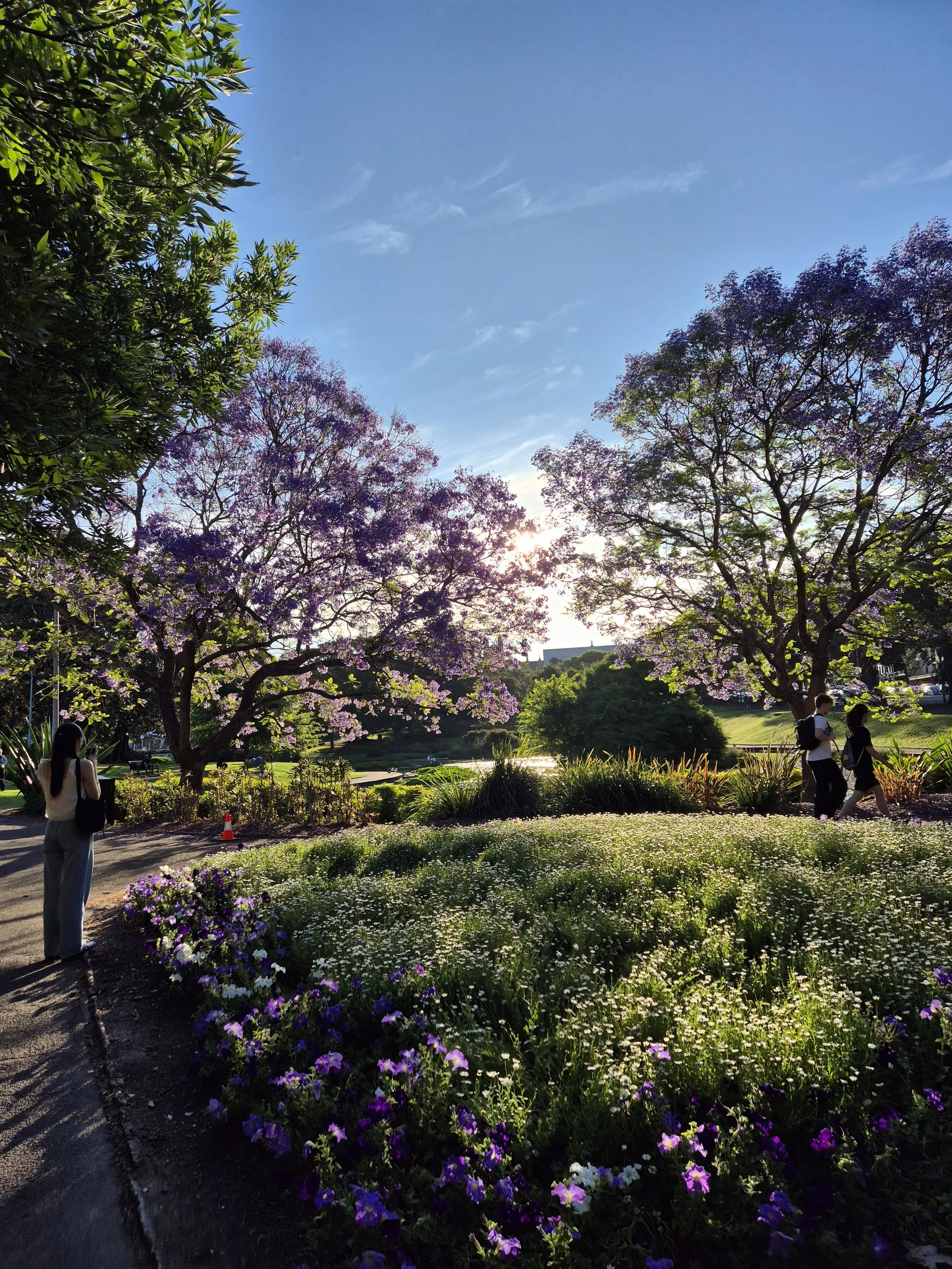
[A familiar threshold by Gabriela Muriel Huertas Pomalaya] - Victoria Park can feel strangely familiar to me. Its lake, wide lawns and the traffic moving around it take me back to Parque de la Exposición in Lima, near where I grew up. Both parks sit within busy parts of the city yet give people a place to slow down for a moment. They are different, but walking through Victoria Park often brings back that feeling of passing through the centre of Lima. Over time, this small recognition has made Sydney feel less new. The park holds both places for me: my memories of Peru and the life I am gradually building in Australia.
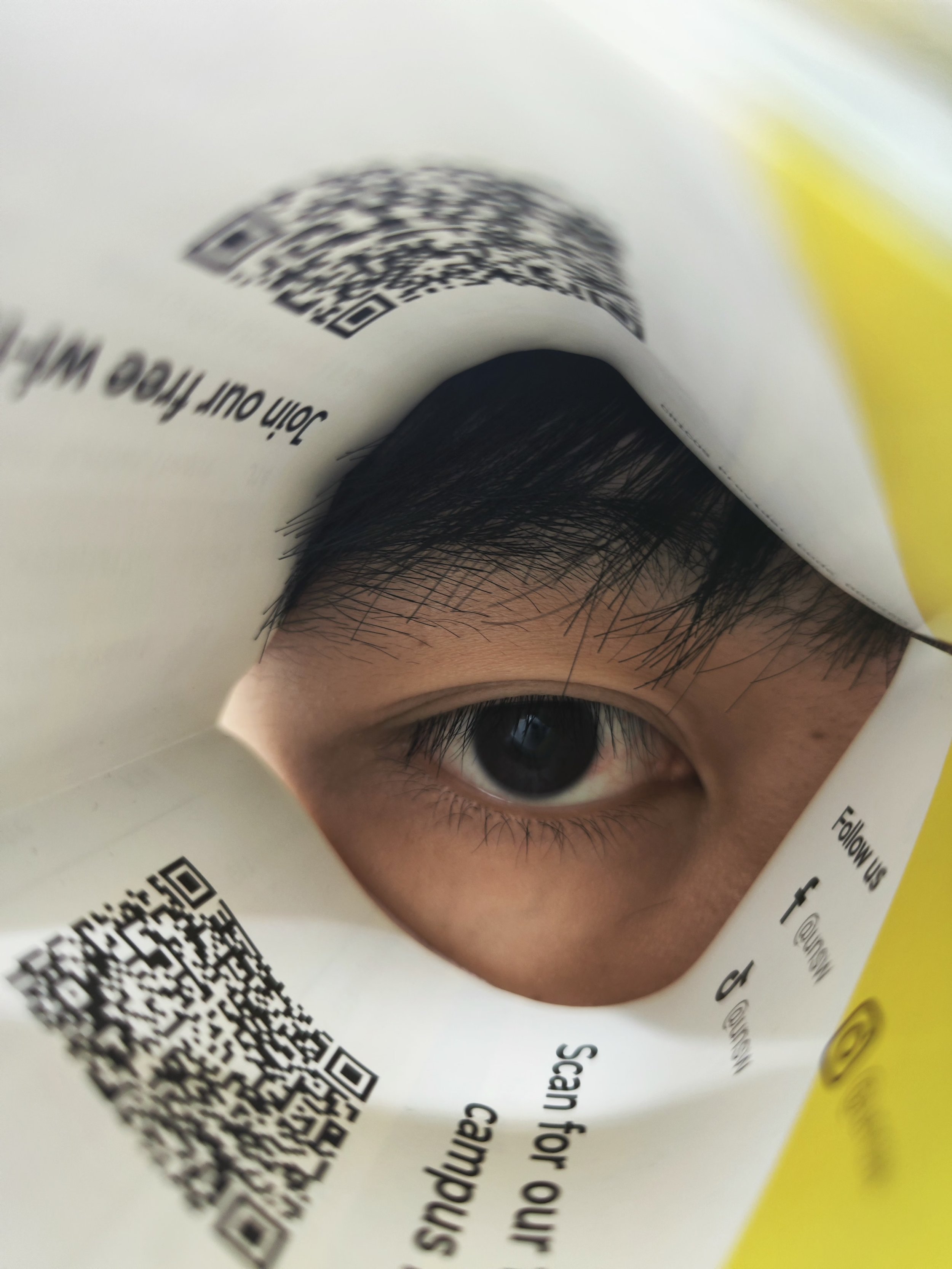
[Unfolding a Place by Yang Wu] - As an international student at the University of Sydney, I use my eye like a scanner to read a rolled UNSW brochure, including its QR codes, social media links and institutional information. Rolling the brochure bends and distorts these messages in my field of vision, symbolising how mediated representations offer only a partial version of place. I lived near UNSW for three years and walked through its campus every day, becoming deeply familiar with a university I never formally belonged to. That lived experience revealed what the brochure could not. My translocal identity is shaped through the overlap of mediated information, lived experience, memory and formal belonging.
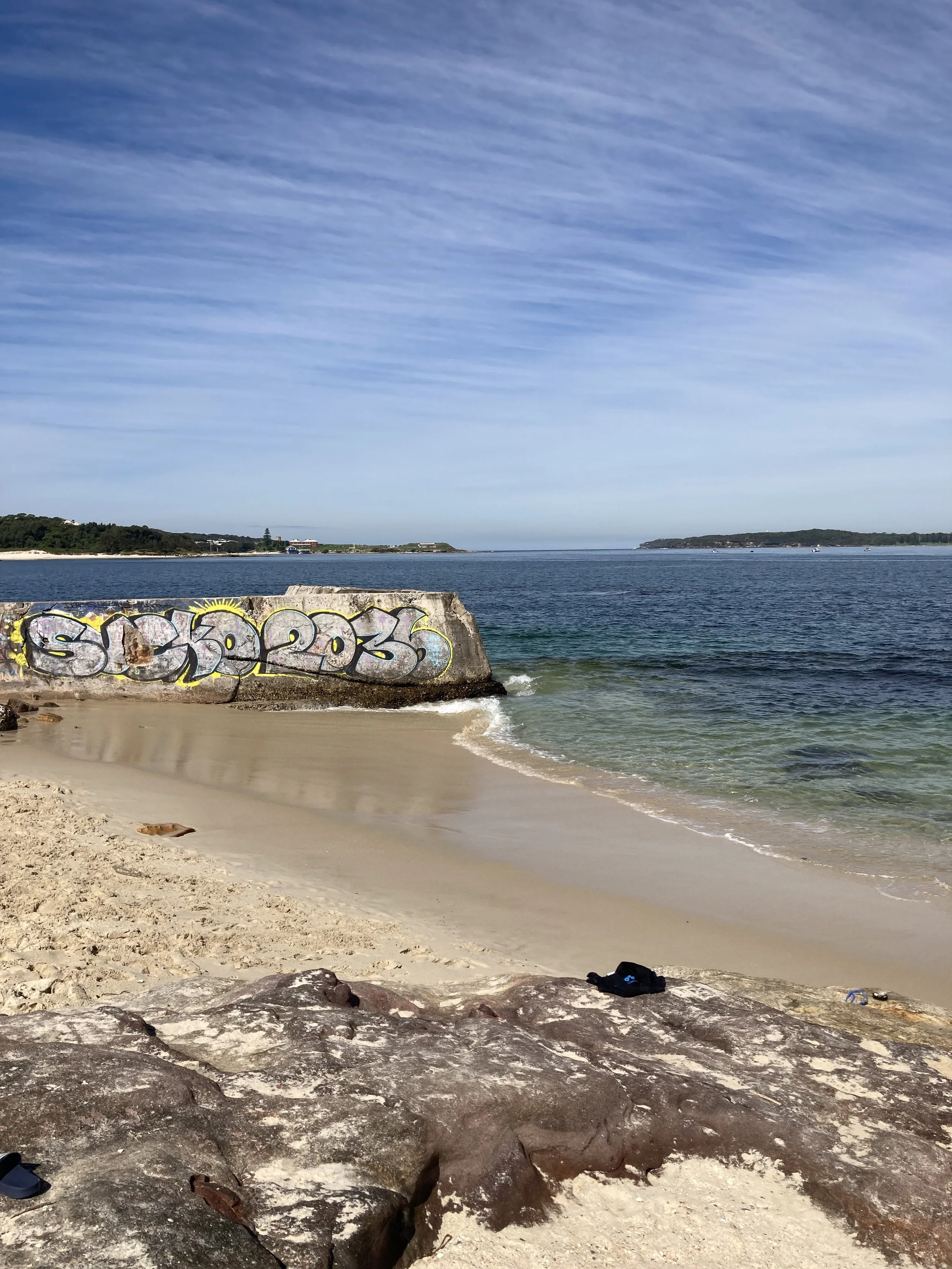
[Go with the flow by Laura West] - ‘The Wall’ or “The Sucko” as its commonly known by the locals, is all that remains of the inflow channel previously used for the Bunnerong Power Station, to draw water from Botany Bay to cool the condensers of the power station. Instead of fighting the existing structure, the local community simply “go with the flow” by honouring industrial history and adapting the decommissioned infrastructure to a recreational area connected to nature and history. Tagged here with the postcode 2036, it is a place only locals know and enjoy.
[Invisible Connections by Iesha Singh] - The translocal connections represented in 'Invisible Connections' span Western Sydney, stretching from Parramatta through to the Hawkesbury River around Windsor and Richmond, as well as places within the Sydney CBD. These dwellings reveal connections between people, wildlife, landscapes and cultures that extend beyond individual locations. As people move through and reshape these environments, wildlife also moves across the same interconnected landscapes, adapting to changing urban and natural spaces. I explore how these relationships connect the everyday experience of Sydney to wider networks of people, places and ecosystems. Together, they reveal that Sydney is not isolated, but part of a constantly moving and interconnected world.
Visual storytelling as an attentive practice
For both of us, visual storytelling begins with paying attention.
Ian’s relationship with visual storytelling began at the age of eleven, when he used his first camera, a half-frame Olympus Pen loaded with black-and-white film, to photograph Hong Kong. The city’s topography, verticality and constant activity taught him to notice stories of movement, displacement and cultural mixture. This early experience later informed his research on “diasporic vernaculars”: the ways migrant communities shape urban environments through everyday cultural and commercial practices (Beynon and Woodcock 2023).
The students’ works prompt us to pause and look at places that may have become too familiar to notice. A photograph can hold a passing moment. A collage can bring distant places and times together. A reel can show how connections unfold through movement and sequence.
The student works reminded us that images do not tell stories alone. An image may first appear to show an ordinary room, street, market or beach. The student’s reflection can then reveal a memory, cultural reference or personal connection that changes how we see it.
No single work can fully explain translocal urbanism. Together, however, these works show its presence at different scales: across countries and generations, but also within a room, a meal, a landscape or a passing encounter.
We thank all the students who shared their visual works and stories with us. We also thank the Festival of Urbanism team for continuing to make space for student creativity. We thank PIA Emerging Planners for partnering with the competition and contributing to its judging and promotion, as well as our colleagues across the University and professional networks who helped spread the word and encouraged students to participate.
We congratulate all participants, and invite you to spend time with the works and the different interpretations of translocalism they make visible.
References:
Ang, I. (2001), On Not Speaking Chinese: Living Between Asia and the West, Routledge, London.
Beynon, D. and Woodcock, I. (2023), ‘Diasporic Vernaculars: Different Australian Commercial Precincts’, in P. Memmott, J. Ting, T. O’Rourke and M. Vellinga (eds), Design and the Vernacular: Interpretations for Contemporary Architectural Practice and Theory, Bloomsbury, London, pp. 213–229.
Doherty, G. (2026), ‘Trancescapes: Afro-Brazilian Terreiros and Other Landscapes’, Denis Winston Memorial Lecture, University of Sydney, Sydney, 5 September.