

Student
Visual Storytelling Competition
Festival of Translocal urbanism 2026
Image: 2025 FoU Photo Competition, Highly Commended, The Berry Hay Shed
Think about your everyday experiences of life wherever you call home and focus on those places and situations where you have felt connected to other places and times as well as to the present moment. This is translocalism.
Translocal urbanism draws attention to the deep and intersecting relationships between people and places over time, from the legacies of colonisation to contemporary migration and cultural diversity. These connections may be enriching, difficult, ambiguous or uneven. They can be seen in our identities, homes, food cultures, social networks, urban infrastructure, cultural life and environmental practices.
We are curating an exhibition of students’ experiences of translocalism for an exhibition that will form part of the 2026 Festival of translocal Urbanism September 6-11 (Sydney).


The competition has concluded.
Thank you to everyone who entered and shared their creativity with us. Explore the winning entires and read Dr Vera’s curatorial essay below.
Key dates
3 August
Competition opens
30 August
Competition closes
10 September
Winner announcement / Award night
Choose an entry stream
1
Hybrid Identities
Create a visual work that represents your personal identity, drawing on elements such as cultural and social infrastructure, food, places, memories, traditions, or networks that have shaped who you are.
2
Hidden Global Sydney
Document one or more places in Sydney that reflect connections with another culture, city, country or wider global influence. Your entry might reveal how migration, cultural exchange, identity or global networks shape Sydney’s urban landscape.
Refer to the guidelines for details on the written reflection’s submission format and assessment criteria.
Judging panel
The judging panel will comprise a member from the PIA, along with the special exhibition curators, Dr Ian Woodcock and Dr Vera Xia.
guidelines
-
The competition is open to students who meet the following eligibility requirements:
Be currently enrolled in a university, TAFE, or other recognised tertiary education institution in New South Wales (NSW) at the time of entry.
Hold an active student email address that can be used to verify current enrolment.
There is no age limit for entrants.
Students from all disciplines and fields of study are encouraged to participate. You do not need to be studying photography, design, planning, or a related field.
-
Stream 1 Hybrid Identities
Create a visual work that represents your personal identity, drawing on elements such as cultural and social infrastructure, food, places, memories, traditions, or networks that have shaped who you are.
Submit format, either:
one photograph; or
one collage.
Written reflection:
Include a short reflection (approx. 100 words) explaining the elements you chose and how they express your ‘translocal identity.’
———————————————————————-
Stream 2 Hidden Global Sydney
Document one or more places in Sydney that reflect connections with another culture, city, country or wider global influence. Your entry might reveal how migration, cultural exchange, identity or global networks shape Sydney’s urban landscape.
Submit format, either:
one photograph; or
one short photo reel featuring up to three Sydney places.
Written reflection:
Include a short reflection (approx. 100 words) explaining the translocal connection represented by the place or places featured in your entry.
-
Featured in a digital exhibition on the FoU website.
May be published (with attribution) in the FoU Review.
-
Judging / Criteria for submissions:
Technical: Composition, lighting, exposure, colour and contrast.
Artistic: Creativity, storytelling, impact
Theme: Adherence to the idea of ‘translocal urbanism’.
-
Best Overall ($500)
Highly Commended ($200 × 2)
Creative Award – Best Storytelling ($100).
-
For Stream 1, entrants may submit either an original photograph or a collage. Single photographs must be taken by the entrant. Collages may incorporate photography, illustration, digital artwork and AI-generated imagery. Entrants must identify any use of generative AI and confirm that they have the right to use all included material.
For Stream 2, all photographs and reel footage must be created by the entrant. AI-generated images/clips are not permitted. Basic editing such as cropping and adjustments to colour, brightness or contrast is allowed, but the entry must not misrepresent the places documented.
Competition Winners
Best overall
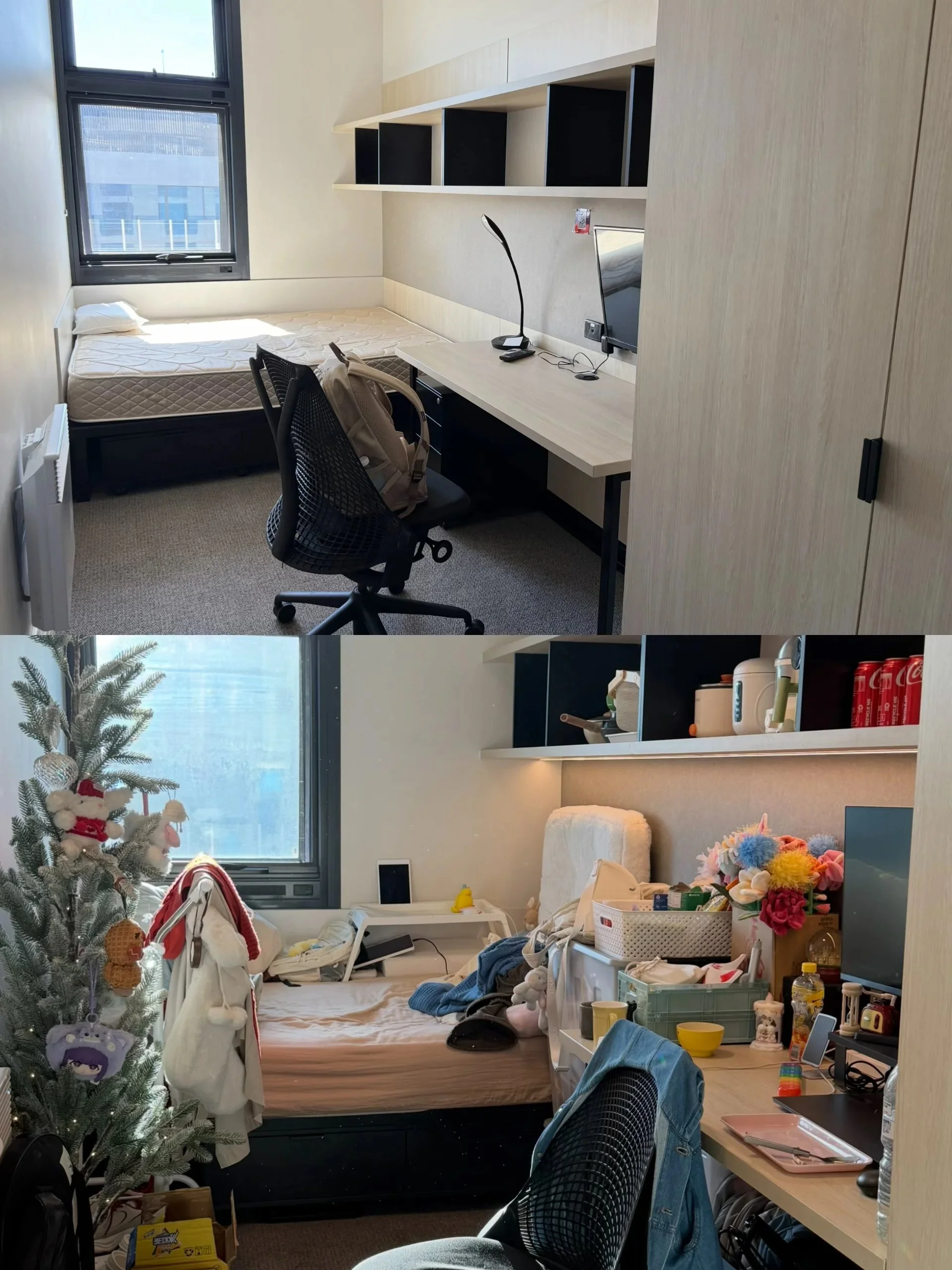
The Room That Learned My Name
by Hejia Chen
Judges’ comments
The entry effectively contrasts the generic interior of a student room with a personalised space shaped by cultural elements from the entrant’s home country.
highly commended
Between Places
by Yu Rong
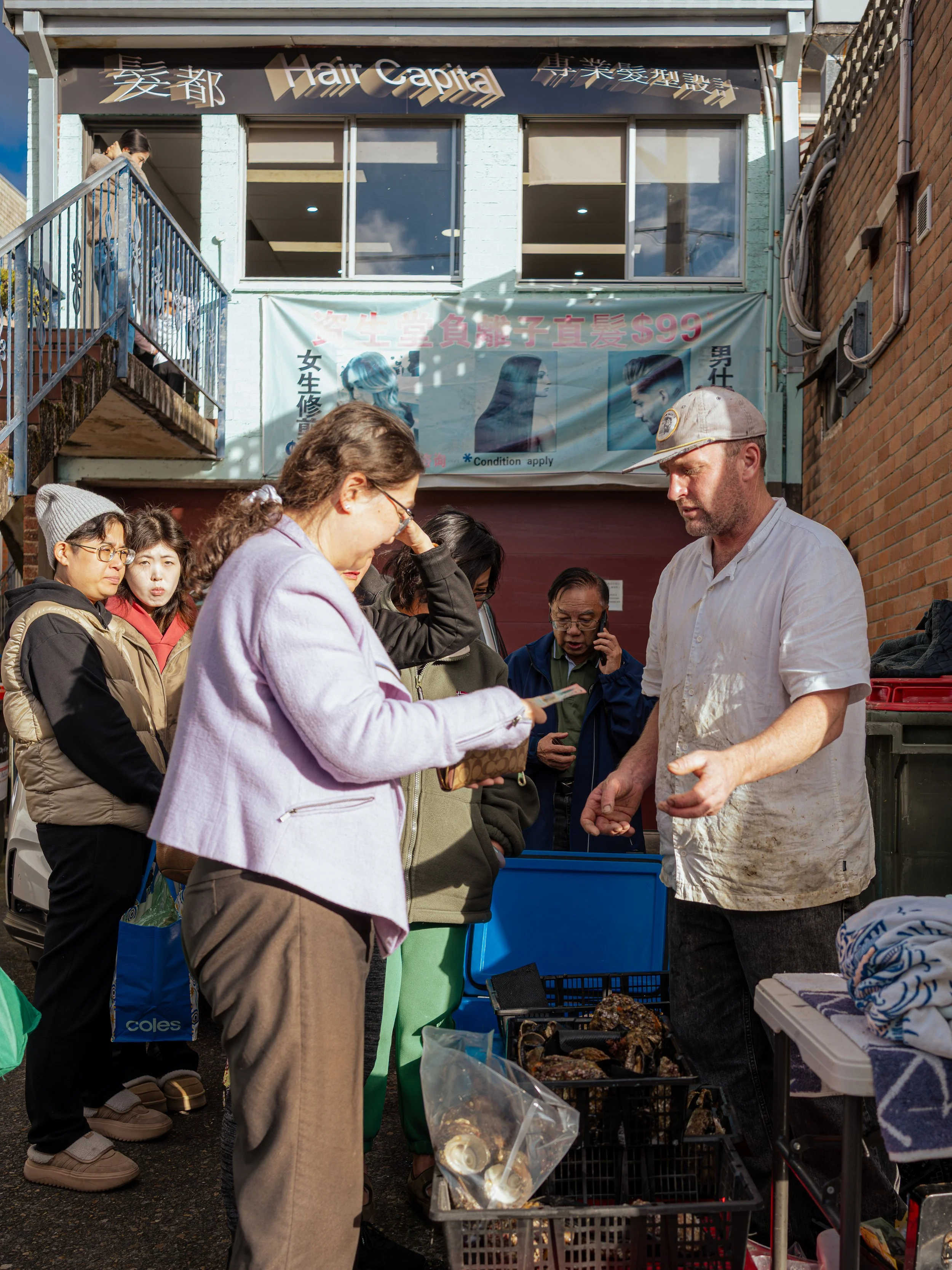
The image aligns strongly with the Hidden Sydney stream, using a powerful photograph to depict people purchasing food from a street vendor within one of Sydney’s translocal networks.
Judges’ comments
Burwood: Local Streets, Global Stories
by Michelle Cheung
The submission presents a reel that captures Burwood Chinatown’s transformation over the past decade into a strong translocal node. The entry combines compelling visual storytelling with exceptionally controlled technical and aesthetic choices.
Judges’ comments
Creative Award – Best Storytelling
After The Flag Comes Down
by Fadlan Hamizan Ekantoro
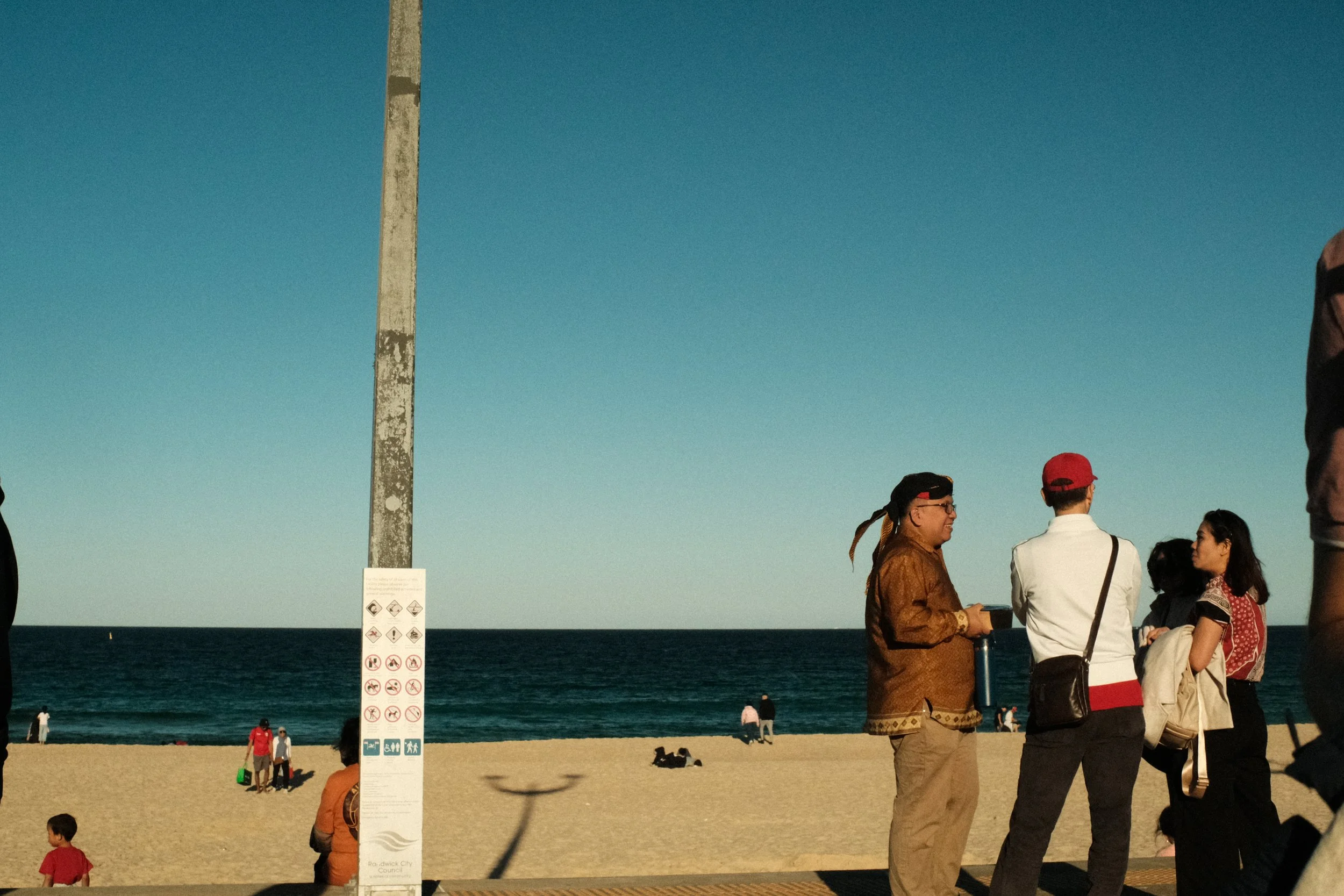
The photo and caption work exceptionally well together, transforming an everyday Maroubra Beach scene into a touching story about culture, belonging and finding home in another place. The small details invite us to look closer and discover the meaning behind the moment.
Judges’ comments
Honourable Mention
Celebrations of Home
Ellen Yangwei Luo
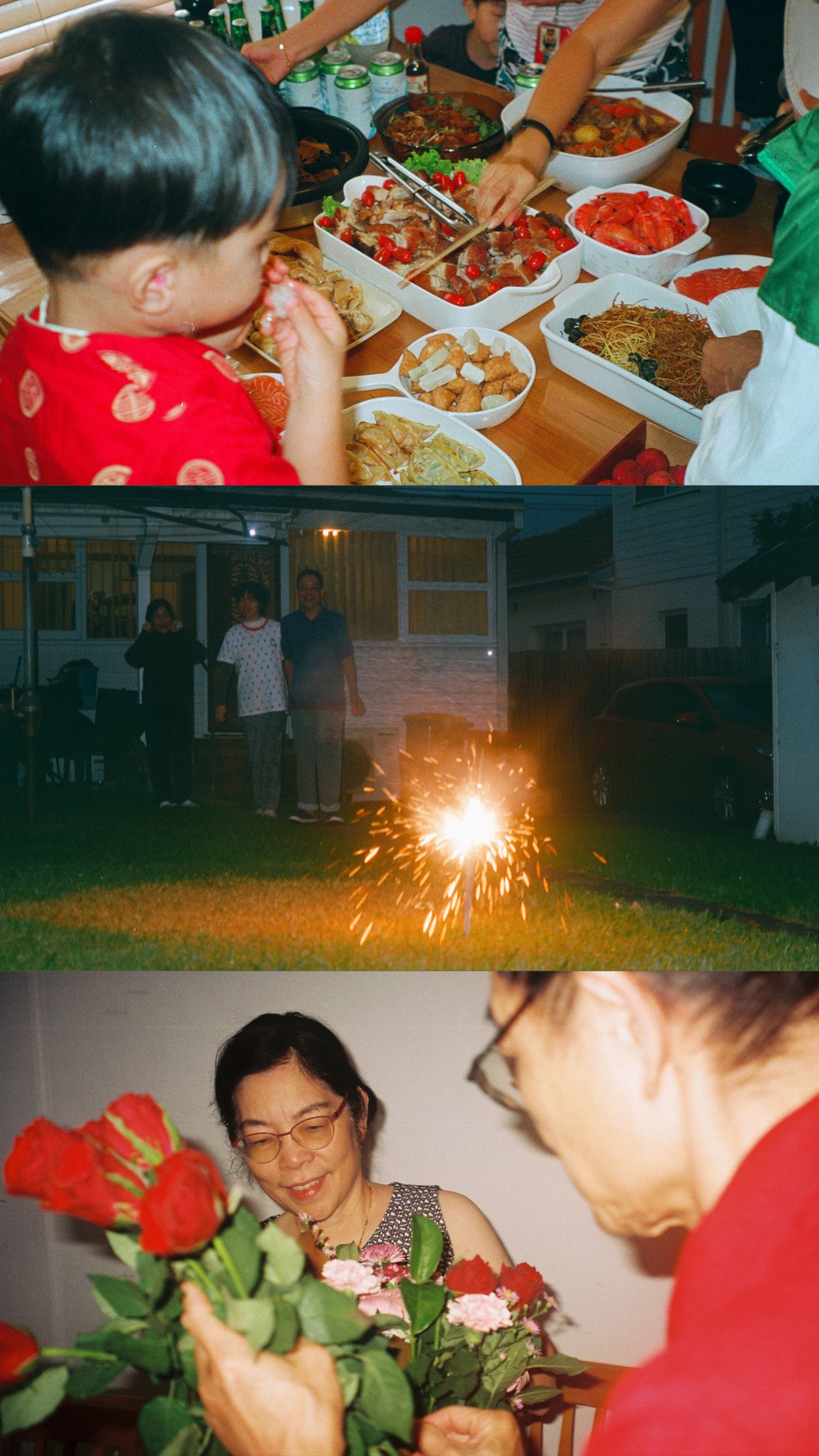
The entry presents a three-photo collage capturing cultural moments of celebration, food and shared greetings. It is technically strong and artistically effective, and adequately responds to the selected stream.
Judges’ comments
Judges’ bios
Dr Vera Xia, Design and Urban Technologies Lecturer, University of Sydney
Dr Vera Xia is a Design and Urban Technologies Lecturer in the School of Architecture, Design and Planning at the University of Sydney. She has a PhD in urban and regional planning and expertise in various urban technologies such as smart street furniture, social fitness apps, light festivals, and smart greenhouse technologies. Her PhD research titled 'Smart Technologies, Loneliness and Young Adults: Towards an Understanding of the People-Place Relationship in Urban Open Space' focuses on the use of smart technology in urban open spaces and its impacts on social wellbeing, particularly for young adults.
Apart from her research, Vera is also a creative and visual storyteller. Her film “(un)habitable circulation,” created for The Festival of 'Endangered' Urbanism 2021, encourages the audience to reconsider the liveability of transit and the rhythms of our daily lives during and after the pandemic.With prior professional experience in strategic planning and urban design in both private and public sectors, Vera is committed to researching and creating sustainable and equitable cities through her teaching and research activities.
Dr Ian Woodcock, Senior Lecturer in Urbanism, University Of Sydney
Dr Ian Woodcock is Senior Lecturer in Urbanism in the Sydney School of Architecture, Design and Planning, The University of Sydney, Australia. He is a UK-registered architect with over 30 years of experience encompassing practice, research and teaching, across government, private and community sector settings. His research focuses on urban change, sense of place, and the use of design as a research method.
Jack Freckelton
Jack is a town planner with ten years experience in the built environment. Jack has expertise in statutory planning, strategic advisory and project management across a range of projects in Greater Sydney and regional NSW. He is passionate about denser neighbourhoods, affordable housing and sustainable urban renewal. He is a member of the Planning Institute of Australia (PIA) NSW Emerging Planners Committee.
Jack has a Bachelor of Construction Management (Building) from the University of Newcastle and is studying a Master of Urban Planning at the University of Technology Sydney. Jack has research experience in disaster resilience and mitigation planning, as well as family-orientated apartment development. His research has focused on how incentive structures can enable private sector delivery of equitable and quality housing in NSW.
Rishi Gujarathi
Rishi is an urban planner, urban designer, architect, and graphic designer with more than 14 years of industry experience. Passionate about creating sustainable, resilient, and inclusive places, he brings a multidisciplinary perspective to urban challenges, combining strategic planning, design excellence, and research-driven thinking. Rishi currently serves on the NSW Emerging Planners Committee of the Planning Institute of Australia and is also undertaking housing research at the University of Sydney.